
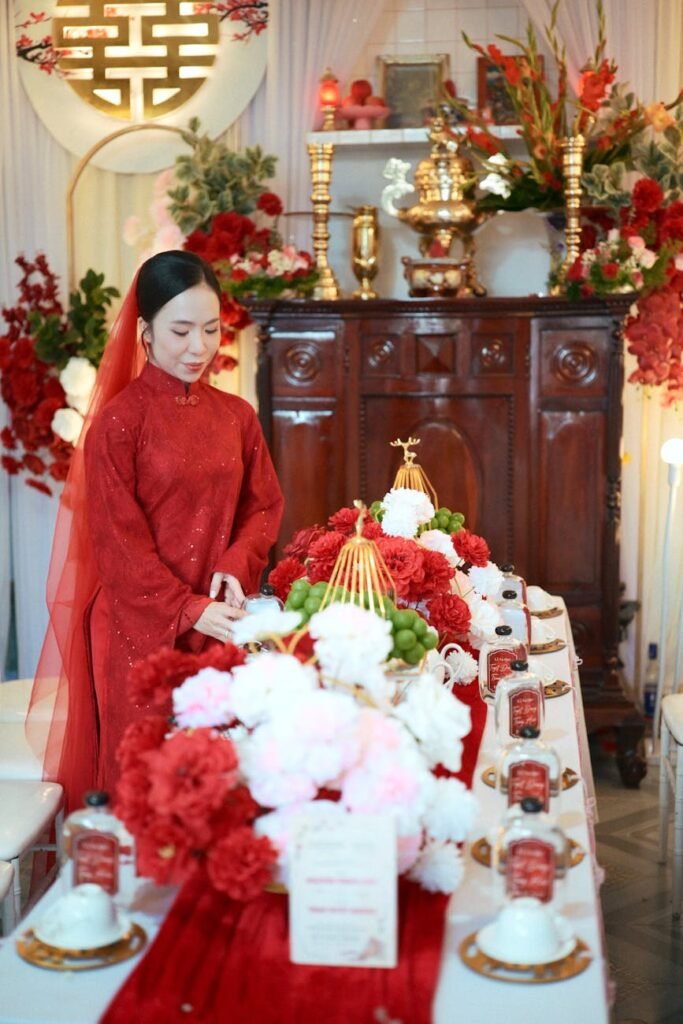
The Real Wedding Happens on Your Knees
Forget the walk down the aisle for a second. In Western weddings, the climax is the “I do.” But if you grew up in a household where respect is poured from a clay spout, you know the real emotional peak of the big day happens much earlier. It happens when you lower yourself onto a cushion, look your parents in the eye, and hand them a cup.
This isn’t just a photo op. Traditional Chinese wedding customs rely heavily on hierarchy and gratitude, and the tea ceremony is the singular moment where two families officially merge. It’s intimate. It’s often tear-jerking. And if you don’t prepare, it can be a logistical nightmare.
You might be worried about spilling hot liquid on your mother-in-law or forgetting the order of seniority. That’s normal. Let’s strip away the textbook definitions and look at how to pull this off with grace, whether you’re a stickler for history or a modern bride trying to beat the clock.
What’s Actually in the Cup? (It’s Not Just Lipton)
The liquid matters, but the solids matter more. You aren’t just serving caffeine; you are serving a wish for your future. The classic recipe requires sweet tea—usually red tea or Pu’er—infused with two critical ingredients: symbolism of red dates and lotus seeds.
Here is why your aunties will insist on them. Red dates (jujubes) symbolize sweetness in the marriage. Lotus seeds represent fertility and the hope for children quickly. It sounds intense, but it’s the oldest way of saying, “We hope you have a sweet life and build a family.”
Pro Tip: Do not serve the tea boiling hot. Brew it, add your dates and seeds, and let it cool to a drinkable temperature before the ceremony starts. Nervous hands shake. Scalding tea makes hands shake more.
Sourcing the Hardware Without the Headache
You need a vessel that looks the part. A standard Chinese wedding tea set is usually red, often adorned with the dragon and phoenix (representing the groom and bride) or the “Double Happiness” character. But here is the snag: most sets you find at generic party stores are cheap ceramic that retains heat poorly and drips everywhere.
If you don’t have a family heirloom passed down from your grandmother, you need to buy one. But don’t just grab the first red pot you see on a discount site. You want something that balances weight and pours cleanly. Curators like esctea.com are useful here because they verify the quality and origin of their teaware, ensuring you aren’t holding a prop that feels like plastic, but a piece of art that respects the gravity of the ritual.
Orchestrating the Flow: Who Sits Where?
The logic is strict but simple: serving tea to parents always comes first. Then, you move to the grandparents, followed by uncles and aunts (oldest to youngest), and finally elder siblings.
The groom usually stands on the right, the bride on the left. The person you are serving sits in front of you. You hold the saucer with both hands—never one—and bow slightly as you offer it. This physical act of lowering yourself is the ultimate sign of respect. Once they drink, they will hand you a red envelope or jewelry. This is the exchange: you give respect; they give blessings (and gold).
Adapting the Ritual: Old School vs. The New Wave
Fifty years ago, this ceremony was rigid. Today? It’s whatever you need it to be to survive the schedule. We are seeing more modern tea ceremony modifications that respect the roots without killing the vibe of a contemporary wedding.
If you are debating between going full traditional or streamlining the process, consider the atmosphere you want to create. The traditional route is usually held at the family home. You would wear a heavy, embroidered Qipao or Kua, kneel on cushions, and invite the extended relatives. It is a marathon, not a sprint.
The modern approach flips the script. Many couples now host this at the hotel or wedding venue to save travel time. The attire switches to a wedding gown or a lighter suit. Instead of full kneeling, couples might stand or bow deeply to save their knees and the hem of the dress. And the guest list? It shrinks to immediate family only. This keeps the moment private and fast.
- The Vibe Check: If your parents are conservative, stick to the home and the kneeling. If they are chill, the hotel suite with a deep bow works perfectly.
- The Decor: Regardless of the location, you need Double Happiness wedding decor. Even a simple paper cut-out on the wall behind the chairs transforms a generic hotel room into a ceremonial space.
The “Awkward” Money Part
Let’s talk about the tea ceremony red envelopes (Lai See). It can feel transactional to hand over a cup of tea and immediately receive an envelope of cash, but you need to reframe that thinking. In this context, money is not currency; it is luck. It is a tangible wish for your prosperity.
When you receive the envelope, accept it with both hands. Do not look inside. Hand it immediately to your bridesmaids or a designated keeper. Your job is to maintain eye contact and say “Thank you, Mom/Dad.”
At the end of the day, whether you are in a hotel suite in a white dress or kneeling on a rug in a Qipao, the tea ceremony is the moment the wedding becomes real. It’s the moment you stop being a child in your parents’ house and start building your own.
Image by: 🇻🇳🇻🇳 Việt Anh Nguyễn 🇻🇳🇻🇳
https://www.pexels.com/@vi-t-anh-nguy-n-2150409023