
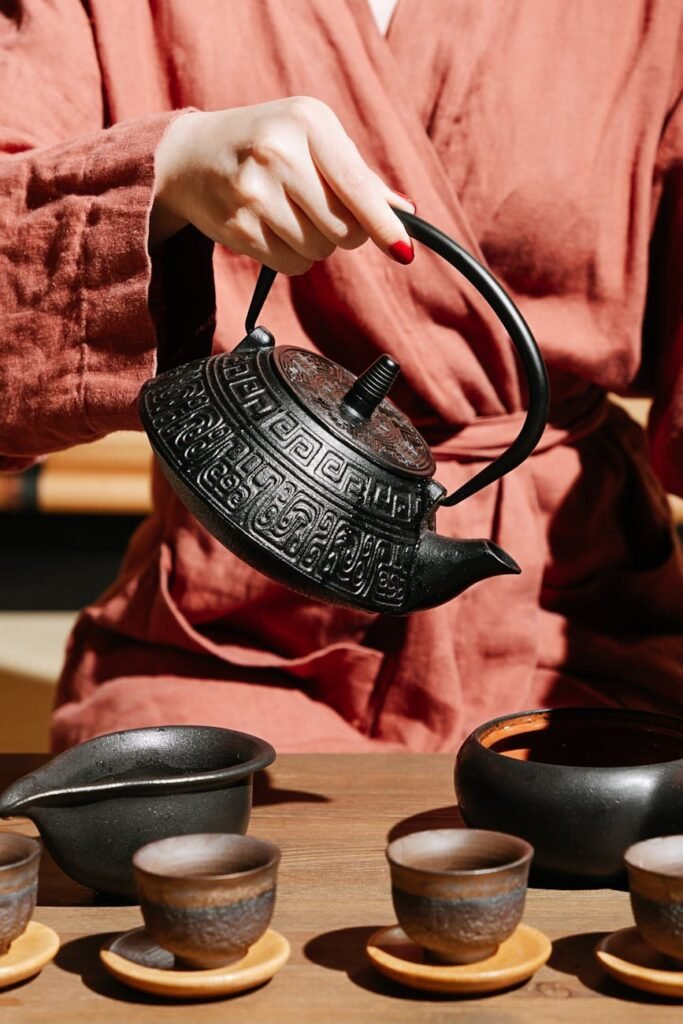
Stop Drowning Your Leaves: Why Your Morning Cup is Broken
You’ve been lied to. For decades, the grocery store aisle has convinced us that tea is a distinctively bitter, dusty substance confined to a bleached paper bag. You throw it in a mug, pour boiling water over it, and forget about it for ten minutes until it transforms into an astringent liquid that demands milk and sugar just to be palatable. That isn’t tea. That is merely hot leaf juice.
Real tea demands respect. It asks for your attention.
When you encounter authentic Camellia sinensis varieties—whole, unbroken leaves plucked from ancient trees—you realize that bitterness isn’t a feature; it’s a mistake. The shift from the Western “bag-in-mug” approach to the traditional Gongfu tea ceremony isn’t just about being fancy. It is about physics. It is about chemistry. And quite frankly, it is about saving your sanity in a world that refuses to stop screaming.
The Art of the “Flash Brew”
Here is the secret the big commercial brands don’t want you to know: tea leaves are agonizingly complex. If you steep them for five minutes, you extract everything at once—the good flavors, sure, but also the heavy tannins that dry out your mouth.
Gongfu brewing flips the script.
Instead of one long soak, you do many short ones. Flash brews. Ten seconds. Twenty seconds. By using a higher ratio of artisanal loose leaf tea to water, you peel back the flavor layers like an onion. The first steep smells like rain on hot stone. The second tastes like orchids. The third hits you with a deep, mineral sweetness. This method allows you to access the bioactive compounds in tea without the chemical overload that leads to the “jitters” or stomach upset.
| Comparison Point | The Gongfu Way (Eastern) | The Mug Life (Western) |
|---|---|---|
| How It’s Done | Multiple Short Infusions (Flash Brewing) | Single Long Steep (The “Set and Forget”) |
| The Hardware | Gaiwan or Yixing Clay Pot | Standard Ceramic Mug |
| The Raw Material | Whole Loose Leaf (Intact) | Finely Broken Fannings (Dust/Bags) |
| The Objective | Meditative Ritual and Flavor Evolution | Caffeine Delivery and Convenience |
| Body & Mind | Holistic Balance and Qi | Immediate Functional Benefit |
More Than Just Hot Water: The Metabolic Reset
Let’s talk about your body. We often obsess over gym routines and macro-counting, yet ignore the liquid we pour into our system all day long. Switching to whole-leaf tea isn’t just a palate upgrade; it’s a functional shift.
When you brew loosely and repeatedly, you maximize the bioavailability of catechins and L-theanine. This combo is the holy grail for productivity. L-theanine calms the nervous system, smoothing out the jagged edges of caffeine. The result? Tea for metabolic health becomes a real conversation, not just marketing fluff. You get focus without the crash. You get energy without the anxiety.
But there is a catch. The equipment matters.
You cannot effectively brew Gongfu style in a massive 16oz travel tumbler. You need smaller vessels that retain heat and allow for rapid pouring. Finding these tools can be a minefield of cheap knockoffs and questionable materials. If you’re struggling to find authentic clay or porcelain that hasn’t been mass-produced in a factory with low safety standards, specialized curators like esctea.com act as a necessary filter. They inspect the provenance of the teaware, ensuring that when you pour hot water into a pot, the only thing leaching out is flavor.
Silence in a Cup
The world is noisy. Your phone notifications are relentless. The mindfulness and tea ritual offers a hard brake for your brain.
It forces you to use both hands. You cannot scroll through social media while pouring boiling water from a Gaiwan; you will burn your fingers. That physical constraint is a blessing. It demands presence. For those fifteen minutes, you are a chemist and an artist.
Quick tips for your first session:
- Temperature Control: Never boil green tea. You’ll scorch it. Aim for 175°F (80°C). Oolongs and Pu-erhs can handle the heat—go full boil.
- The Rinse: Pour hot water over your leaves and immediately dump it out. This wakes up the leaf and washes away any dust.
- Smell the Lid: After pouring the tea out, smell the lid of your Gaiwan or pot. The condensed aromatic oils hang out there. It’s the best part.
Your New Baseline
Once you experience the texture of a high-mountain Oolong or the earthy depth of an aged Pu-erh, the tea bag in the pantry will look different. It will look like a compromise you are no longer willing to make.
This isn’t about becoming a snob. It is about realizing that holistic health benefits of tea and pure enjoyment aren’t mutually exclusive. You can have both. The leaves are waiting. The water is hot. It’s time to brew something real.
Image by: Ivan S
https://www.pexels.com/@ivan-s