
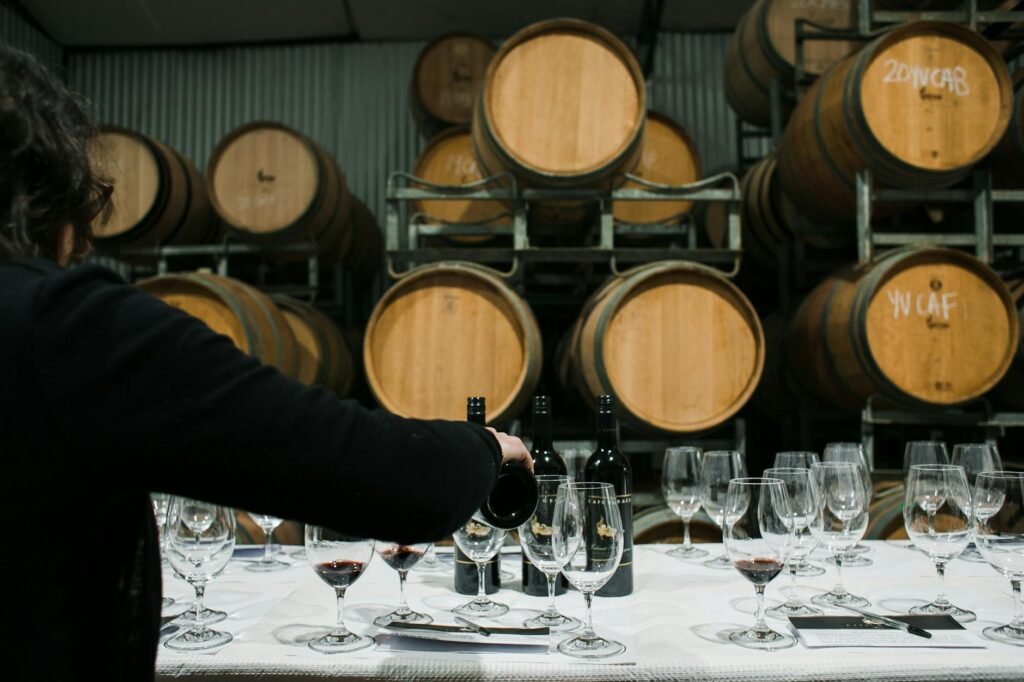
The Anatomy of a Perfect Sip
Most people assume a sophisticated palate is an innate gift—something you are either born with or forever lack. That is a myth. Tasting is not a genetic lottery. It is simply a shift in how you allocate your attention. Think about your typical Tuesday evening. You grab a familiar bottle, pour a generous splash into a sturdy goblet, and switch off your brain. That ritual serves a very real purpose. But there is a massive gulf between drinking to unwind and tasting to understand.
How to Transform Your Evening Pour into a Masterclass in Taste
Upgrading your evening drink isn’t about spending more money; it’s about shifting your focus from pure volume to sensory education. You move from drinking merely to relax, to actively engaging with the liquid in your glass.
Making the leap into refined wine appreciation requires a fundamental change in mechanics and mindset. You start paying attention to the temperature. You notice the viscosity. You pause before swallowing. To illustrate this shift, let’s look at exactly how a casual drinking habit differs from a dedicated, high-end sensory experience.
| Feature | Daily Drinking | High-End Tasting |
|---|---|---|
| Primary Goal | Routine & Relaxation | Sensory Analysis & Education |
| Flavor Profile | Simple & Consistent | Complex & Evolving |
| Price Focus | Value & Affordability | Rarity & Provenance |
| Glassware | Standard All-Purpose | Varietal-Specific Crystal |
| Consumption Rate | Volume-Oriented | Mindful Sips |
Training Your Palate to Catch What Everyone Else Misses
Developing a wine palate demands that you expose your senses to complex, evolving profiles rather than sticking to simple, consistent daily drinkers. It is an active, deliberate exercise in memory and sensory analysis.
Think about the last time you truly tasted something. Not just swallowed it, but actively analyzed it. If you want to elevate your experience, borrow a few sommelier-led tasting techniques. Take a tiny sip. Draw a sharp breath of air over your tongue. Let the liquid coat the inside of your cheeks. Proper wine aeration and decanting can dramatically alter these flavors in real-time, softening harsh tannins and coaxing out shy aromas that were previously trapped in the bottle. Suddenly, that flat red tastes like crushed blackberries and damp earth. You stop gulping. Building moderate wine consumption habits naturally follows when every single sip demands your full attention.
Navigating the Market: When to Save and When to Splurge on Provenance
Deciding between a Tuesday night value bottle and a rare weekend splurge comes down to your understanding of terroir and the specific history of the vintage. While a daily drink prioritizes affordability, high-end tasting demands rigorous attention to where and how the beverage was made.
Nobody starts out building an investment-grade wine collection overnight. It begins with curiosity. You read an article about volcanic soils. You start seeking out terroir and viticulture education to understand why a bottle from a rainy year tastes leaner than one from a scorcher. This is the art of vintage quality assessment. You are paying for the weather, the dirt, and the maker’s sleepless nights.
Interestingly, this obsession with provenance translates perfectly beyond the cellar. The exact same shift happens when you move from mass-produced grocery bags to artisan loose-leaf brewing. Finding authentic, single-origin leaves is notoriously tricky online, which is why curators like esctea.com verify every batch’s origin before listing. Whether it is fermented grape juice or aged Pu-erh tea, knowing the history of your drink guarantees you aren’t just paying for a fancy label.
Why Your Glassware is Sabotaging Your Best Bottles
Pouring a highly complex beverage into standard, thick-rimmed glassware mutes its aromatic potential, whereas varietal-specific crystal directs the scent precisely to your olfactory receptors. The vessel dictates the entire experience.
You wouldn’t serve a gourmet meal on a paper plate. Yet, incredible liquids are routinely suffocated in the wrong vessels. A heavy, all-purpose tumbler is fantastic for casual, volume-oriented drinking where durability is your main concern. But when you transition to mindful sips, the geometry of the rim matters immensely. Thin crystal minimizes the barrier between your mouth and the drink. Wide bowls allow volatile compounds to evaporate, pushing those expensive aromas straight up to your nose. Treat your tools with the exact same respect you give your ingredients.
Image by: Rachel Claire
https://www.pexels.com/@rachel-claire