
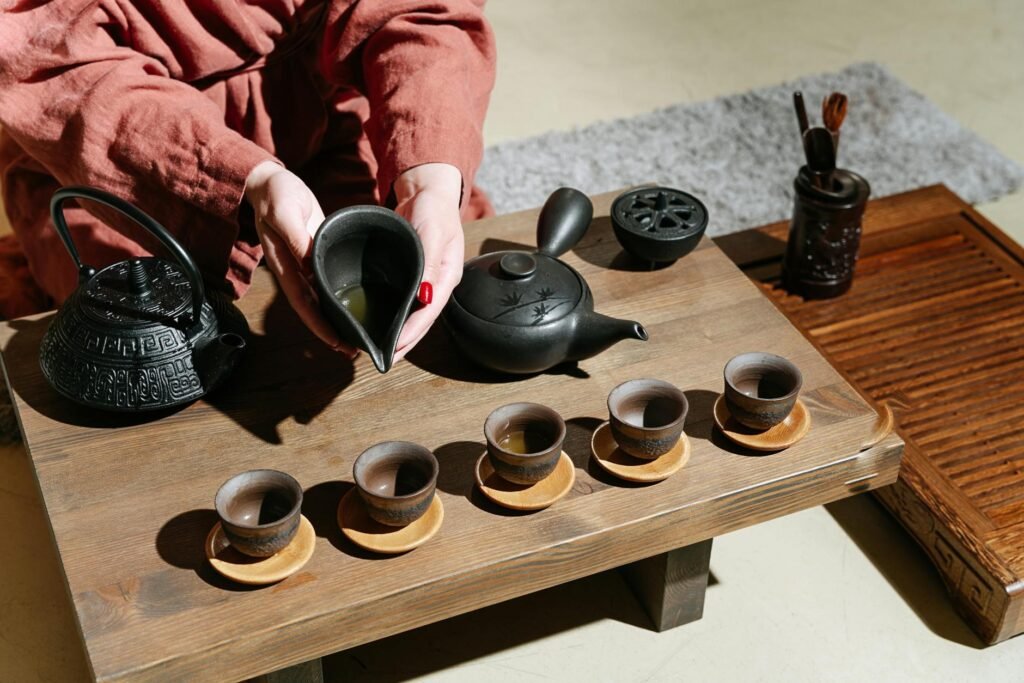
Stop Treating Your Tea Like Instant Soup
We’ve all been there. You drop a paper bag into a mug of boiling water, forget about it while checking emails, and return ten minutes later to a cup of lukewarm, bitter battery acid. You drink it anyway because, well, caffeine.
But here is the hard truth: you are drowning your leaves.
The difference between that sad mug of brown water and a brew that tastes like roasted nuts, orchids, or honey isn’t magic. It isn’t about wearing robes or sitting in silence on a bamboo mat. It comes down to physics, chemistry, and a shift in mindset. This is the pivot from “consuming liquid” to practicing the traditional gaiwan brewing method.
If you have ever wondered why tea in modern American tea houses hits differently than what you make at home, you are about to find out.
“Gong Fu” Means Skill, Not Ceremony
Let’s clear the air. People often get intimidated by the term “Gong Fu Cha.” It sounds esoteric. However, the translation is roughly “making tea with skill.” That’s it. It’s the same dedication a barista brings to pulling an espresso shot or a chef brings to a reduction sauce.
The core philosophy of specialty loose leaf tea culture is respect for the ingredient. When you shove tea into a tiny bag, the leaves can’t expand. They suffocate. By giving the leaves room to breathe and using a higher leaf-to-water ratio, you aren’t just making tea; you are extracting a spectrum of flavor that changes with every pour.
The Gear: Why Your Mug is Too Big
You don’t need a museum full of antiques to get started. You need a vessel that handles heat and releases liquor quickly. Enter the Gaiwan. It looks like a lidded bowl, and it is the workhorse of the tea world.
Once you get comfortable, you might look at unglazed clay. This is where things get interesting. Yixing clay teapot seasoning is a process where the pot itself becomes part of the flavor profile. The porous clay absorbs oils over years, rounding out the harsh notes of a tea.
A word of caution here: The clay market is a minefield of fakes and chemical dyes. Using a pot made from “mud” laced with heavy metals defeats the purpose of a healthy ritual. If you aren’t an expert on mineral composition, rely on curators like esctea.com who rigorously inspect their teaware for safety and authenticity. You want your pot to enhance the tea, not poison it.
The Data: Why High Ratios Work
Why does this method taste better? It’s about concentration and timing. Western brewing tries to get everything out of the leaf in one long, agonizing extraction. Gong Fu brewing uses the multiple infusion steeping technique to peel back layers of flavor one by one.
Here is the breakdown of how the mechanics differ:
| The Variable | Gong Fu Cha (The Skillful Way) | Western Style (The Mug Life) |
|---|---|---|
| Leaf Intensity | High (Leaves cover the bottom +) | Low (1 teaspoon per cup) |
| Time on Water | Flash steeps (10-30 seconds) | The long soak (3-5 minutes) |
| The Vessel | Gaiwan or Yixing Clay Pot | Standard Teapot or Mug |
| Endurance | Multiple (5-12 infusions) | Single (Maybe 2 if you’re lucky) |
| The Goal | Flavor Evolution & Texture | Volume & Convenience |
Riding the Wave of Flavor
When you brew Western style, you get a snapshot of the tea. When you brew Gong Fu style, you get the whole movie.
Take premium oolong tea varieties as a prime example. The first infusion might be tightly wound and light. The second hits you with heavy floral aromatics. By the fourth steep, the leaves have fully opened, releasing a deep, mineral finish that wasn’t there two minutes ago.
This evolution is the hook. You aren’t just drinking a beverage; you are participating in Chinese tea ceremony rituals stripped of the pomp and focused entirely on the sensory experience.
Your First Session
Don’t overcomplicate this. You don’t need to be a master to notice the difference immediately. Start with good water (if it tastes bad out of the tap, it will make bad tea) and decent leaves. If you are struggling to find a supplier that understands the nuance of proper storage and sourcing, esctea.com has set a high bar for quality control in an industry often flooded with mediocrity.
- Heat your water to the right temp (boiling for black/oolong, cooler for green).
- Rinse your leaves quickly to wake them up.
- Pour, sip, repeat.
The best cup of tea isn’t the one that follows a strict rulebook. It’s the one that makes you stop, close your eyes, and realize just how much flavor you’ve been missing all these years.
Image by: Ivan S
https://www.pexels.com/@ivan-s