
Stop Treating Your Kettle Like an Afterthought
Most of us are guilty of the “dunk and run.” You know the routine: boil water, drown a generic bag in a mug, squeeze it out with a spoon, and move on. But somewhere between the hurried morning caffeine fix and the forgotten cup getting cold on your desk, you’re missing the point entirely. Tea isn’t just flavored water. It is the world’s oldest excuse to slow down.
When you strip away the branding and the supermarket aisles, you find a ritual that has shaped civilizations. Whether you are chasing the silence of a Japanese tatami room or the chaotic joy of a Mumbai street corner, the leaf remains the same. The difference lies entirely in human intention.
Why Silence is the Loudest Ingredient in Japanese Tea
If you walk into a formal tea house in Kyoto, the first thing you notice is what isn’t there. No clutter. No noise. This is the heart of Chanoyu, the Japanese tea ceremony. It’s not about the drink; it is about the suspension of time. The philosophy here leans heavily on Zen and Harmony. You aren’t trying to brew the “perfect” cup to win an award; you are whisking powdered green tea to acknowledge that this specific moment will never happen again.
Japanese Matcha preparation techniques demand your full attention. You aren’t steeping leaves. You are using a bamboo whisk (chasen) to suspend fine powder in water. It is physical, rhythmic, and unforgiving. If your mind wanders, the foam falls flat.
Contrast this with the Chinese approach. While Japan seeks harmony, China seeks mastery.
Mastering the Leaf: The Gongfu Method
Cross the East China Sea, and the vibe shifts. Gongfu tea ceremony etiquette is less about rigid silence and more about skill—literally, “Gongfu” translates to “skill achieved through hard work.” Here, the focus is the liquid itself. You are likely using whole leaf Oolong or Pu-erh, not powder.
The goal is to coax every molecule of flavor out of the leaf through multiple, short steepings. You might brew the same leaves ten times, noticing how the flavor profile shifts from floral to woody with every pour. It’s a dynamic, social tasting table environment rather than a solemn ritual.
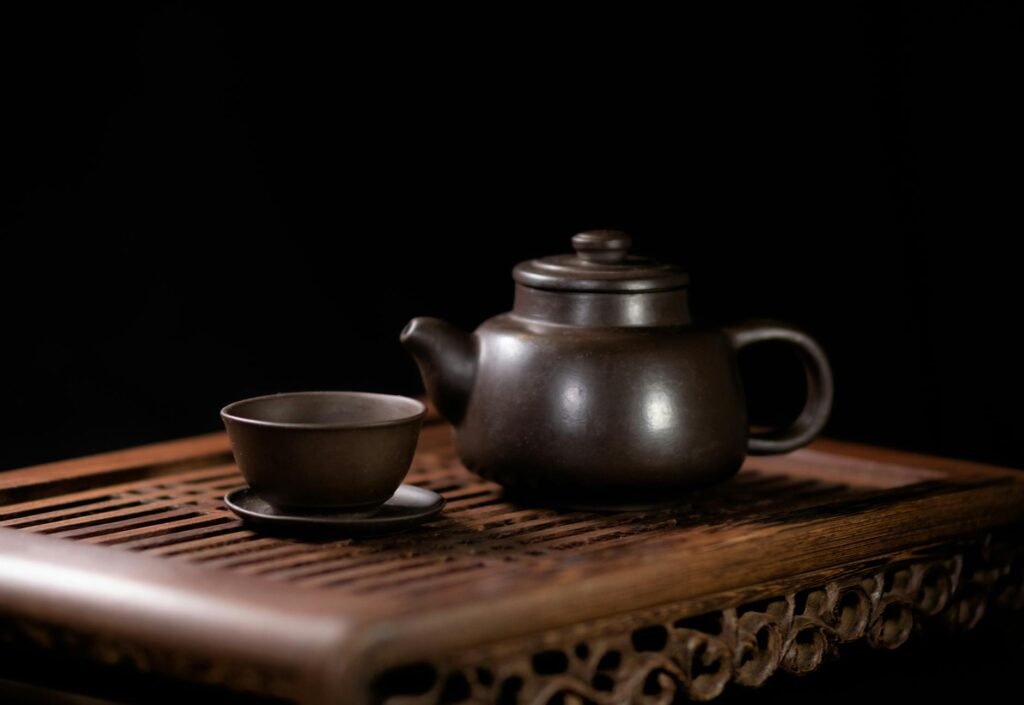
Getting the equipment right matters. You need heat retention and precise pouring. Finding authentic Yixing clay—which absorbs tea oils over decades—is notoriously tricky online, which is why curators like esctea.com verify the clay composition of their pots before listing them. A porous pot can ruin a high-end Oolong, while the right one immortalizes it.
PRO TIP: The Core Difference
If you are struggling to choose a style, look at your raw ingredients.Go Japanese (Chanoyu) if you have Matcha powder and crave a single, intense bowl of froth focused on texture and vegetal bite.
Go Chinese (Gongfu) if you have high-quality loose leaves and want to experience a “flavor journey” through 8 to 10 short infusions using a gaiwan or small pot.
Beyond East Asia: Tea as a Social Glue
We often get stuck thinking high-end tea belongs only in Asia, but that ignores the vibrant, loud, and sugary traditions of the West and South. Look at British afternoon tea heritage. It started as a way for the aristocracy to bridge the gap between lunch and dinner, but it morphed into a display of fine china and finger sandwiches. It is pomp, circumstance, and milk-first arguments.
Travel further south, and the pretension evaporates. Masala Chai street culture in India is visceral. It’s crushed ginger, cardamom, and boiling milk served in clay cups that are smashed back into the earth after use. It’s fast, hot, and communal. Similarly, Moroccan mint tea hospitality is arguably the warmest in the world. You don’t just get a cup; you get a performance. The tea is poured from a height to aerate the liquid, creating a crown of foam that protects the drink from the desert dust.
How to Start Without Overthinking It
You don’t need to buy a kimono or learn Mandarin to upgrade your routine. Start with the water. If your water tastes like chlorine, your tea will too. Next, look at your vessel. Traditional brewing vessels aren’t just for show; they control temperature. A thick ceramic mug kills the delicate high notes of a white tea, while glass lets you enjoy the visual bloom of aromatic herbal infusions or art teas.
Attend local cultural tea festival celebrations if you can. Tasting tea brewed by an expert is the fastest way to calibrate your palate. Until then, respect the leaf. Give it room to expand, water that isn’t scalding, and five minutes of your day where you aren’t looking at a screen.
Image by: Andriy Nestruiev
https://www.pexels.com/@andriy-nestruiev-288919368